
THE HUNT SALES’ LUST FOR LIFE, AFTER IGGY POP, DAVID BOWIE AND TIN MACHINE
 4th January 2022
A chat with Hunt Sales, the famous evolutionary rock drummer of the late 1970s in America. He collaborated for years with Iggy Pop and David Bowie. It was his overwhelming drums of “Lust for Life”, the song that gave the title to the epic album by Iggy Pop in 1977. In Italy we could see him live only in October 1991 with David Bowie and Tin Machine at the Brancaccio Theater in Rome.
In 2019 an American label called Big Legal Mess / Fat Possum Records released an unexpected record product. It is a solo work made by a long-time musician, but who only in old age decided to build an artistic “debut” in his own name. We are talking about Hunt Sales, an American drummer with an amazing curriculum behind him, from rock’n’roll to blues, to jazz dixieland, and who has ranged throughout the great American music, always alongside absolute stars.
In Italy we knew him because of his disruptive drums that accompanied Iggy Pop in that moment of transformation, so evolutionary, of the second half of the 70s. Hunt Sales was with Bowie in the Berlin phase of the trilogy, but we Italians saw him for the first time only in 1991 at the Brancaccio Theater in Rome for two unrepeatable evenings, on the Tin Machine drums, and we had the opportunity to understand how Hunt Sales was an avant-garde drummer, even when he played an almost ‘retro’ genre: it was actually a retro suitably reworked, as Tin Machine did in those two incredible records of the early 90s, courageously producing a music totally contrary to what the new winds of Brit-pop were spreading.
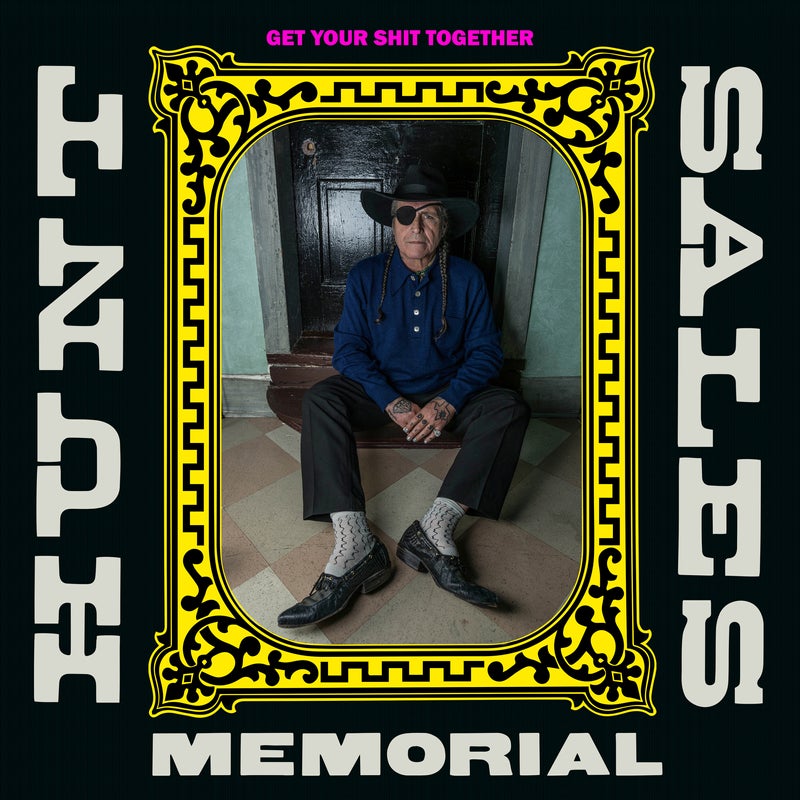
This solo production by Hunt Sales therefore struck us, because it never happens to make a debut with a work that actually represents a sort of memorial, also sound, and cultural. In the album “Get Your Shit Together”, on the cover of which, in fact, the writing “Memorial” stands out, we find ourselves listening to a mixture of deeply American sounds, a mixture of old rock’n’roll but also echoes of sonority blues mixed with that vaguely punk-evolutionary energy that marked his works with Iggy Pop and other artists of the middle age. His story, therefore, through his publication, intrigued us: a story of wandering, of drugs, of itinerant and transversal paths between different musical genres that until now had probably concealed the inner artistic direction that Sales kept in himself, and that today instead it emerges.

-Hello gentle Mr. Sales, thanks a lot for this conversation, it’s a great pleasure and an honour to talk with one of the most great acclaimed drummers of the rock world. Mr.Sales, it’s not easy from where to start to ask you but in a way or other we have to “break the ice” as we say in Italy. You have an excellent reputation as a musician and have always demonstrated strong musical consistency with whoever you have worked with. We can imagine that you have always played with musicians who were close to your feeling, but what are your memories of your beginnings as a musician? Did you feel confident or were you afraid of not doing well?
My memories of starting out, the person that gave me impetus from the start of my career and my love of music was Earl Palmer, a famous New Orleans drummer who worked with Little Richard and Fats Domino. I was at a recording session at 6 years old and saw him play on the session and met him when he worked on one of my dad’s records. It changed my life. Failure has never been an option, not that I haven’t had failures. But as they say, one who doesn’t try is a failure.
-When at the end of the 70s you played with Bowie and Iggy Pop together with your brother Tony, many praised your work and the intro you play in the song “Lust for life” remains memorable. A “cult” that still fascinates and produces energy and clarifies how “Rock” must be! What can you say to us about that breathtaking riff that you play and that you keep throughout the song and that we find in the movie “Trainspotting”? How was born the idea of the drumming part of that song?
 It’s based on several different things. One, Motown, “You Can’t Hurry Love”, “George of the Jungle” which is from a cartoon, and Armed Forces Radio in Berlin, Germany which is something I heard a lot while living In Berlin with Iggy and David. I put it all together and like a lot of things in music there is nothing new, it’s how you borrow it or take an idea for another idea and make it your own.
-You have participated in two important musical turning periods of David Bowie and Iggy Pop, always in the company of your brother Tony on bass in the Berlin period 1976-1977 and with Tin Machine in Montreux and in other recording studios. Even today your interpretation of the song “Sorry” remains one of the best songs of the second album of Tin Machine. What do you think of the experience with Tin Machine today? Was it done everything you wanted to do with Tin Machine?
The good thing about Tin Machine was it got me playing drums again. Prior to Tin Machine I had been doing a lot of arranging and producing for people, not much drumming. Of course to work with David after so many years after 1976-77 with Iggy Pop, to be a little bit older and hook up with David again was great.
-Finally for those who love your music is out your first solo album named Hunt Sales Memorial “Get Your Shit Together”. You say in “One day” I am alone. What it means for you the solitude? For many people “solitude” is a way to escape from the life stress, do you find instead something who gives you more creativity?
 It’s not about being alone. It’s not about solitude. It’s more like being around a lot of people, family friends or strangers, and feeling like you’re alone. It has more to do with a head trip of not feeling like you belong or fit in and it’s a feeling shared by a lot of people. Maybe the outsider, the addict, the alcoholic. It’s a universal feeling to feel alone. People talk about having a hole in them that is never filled. It has to do with all of that, and more.
-Besides pure energy, what must be present in a song you play? A text of a true story?
Hopefully one way or another something I can relate to has to be in the song that will kick off a feeling or feelings that will inspire me. Hopefully that inspiration is shared with the listener, also.
-Your first solo album is so real in my opinion and shows your brilliant talent as a composer. Also your way to sing is warm and rough in the right way and this is not common for a drummer. What is magic for you in your album?
I have a band and this band consists of me and a guy named Tjarko Jeen who is from Holland. I put this band The Hunt Sales Memorial together 10 years ago and the reality is opportunity met on the corner of preparation meaning I was prepared having been rehearsing hundreds of hours with this group and gigging through the years. When the opportunity came to make the record I was prepared. The record was done old school, in a very short amount of time like the records in the sixties and fifties.
-Would you like to play a series of concerts in Europe?
Yes I would. I’m looking for the right promoter to bring me over there.
-Do you feel complete as a musician or you think there is always something to learn?
Yes, there’s always something to learn.
-What are dreams for you Mr. Sales?
To come to Europe and throw the fuck down.
Thank you very much for the kindness Mr. Sales. Best regards and Arrivederci from Italy,
Marcello Nitti © Geophonìe
All rights reserved.
Buy it from:
ITALY
https://www.amazon.it/Your-Shit-Together-Sales-Memorial
U.S.A.
https://www.amazon.com/Your-Shit-Together-Sales-Memorial
9. Casematte e fortificazioni
LA GIOIA DI VIVERE DI HUNT SALES, DOPO IGGY POP, BOWIE E TIN MACHINE
Hunt Sales Memorial, ‘Get Your Shit Together’ 2019, © Big Legal Mess / Fat Possum Records
[English version here]
4 Gennaio 2022
Due chiacchiere con Hunt Sales, celebre batterista del rock evolutivo di fine ’70 in America. Collaborò per anni con Iggy Pop e David Bowie. Era sua la batteria travolgente di “Lust for Life”, brano che diede il tiolo all’epico album di Iggy Pop nel 1977. In Italia potemmo vederlo dal vivo solo nell’ottobre 1991 con David Bowie e i Tin Machine al Teatro Brancaccio di Roma.
Nel 2019 un’etichetta americana denominata Big Legal Mess / Fat Possum Records ha dato alle stampe un prodotto discografico inatteso. Si tratta di un lavoro solista realizzato da un musicista di lungo corso, ma che solo in età avanzata ha deciso di costruire un “esordio” artistico a proprio nome. Stiamo parlando di Hunt Sales, batterista americano con alle spalle un curriculum sbalorditivo, dal rock’n’roll al blues, al jazz dixieland, e che ha spaziato ovunque nella grande musica americana, sempre al fianco di star assolute.
In Italia lo conoscemmo per via della sua dirompente batteria che accompagnò Iggy Pop in quel momento di trasformazione, così evolutivo, della seconda metà degli anni 70. Hunt Sales era con Bowie nella fase berlinese della trilogia, ma noi italiani lo vedemmo per la prima volta solo nel 1991 al Teatro Brancaccio di Roma per due serate irripetibili, alla batteria dei Tin Machine, e avemmo modo di comprendere come Hunt Sales fosse un batterista d’avanguardia, persino quando interpretava un genere quasi retrò: si trattava in realtà di un retrò opportunamente rielaborato, come appunto i Tin Machine seppero fare in quei due dischi incredibili dei primi anni 90, producendo coraggiosamente una musica totalmente contraria a quella che i nuovi venti del brit-pop stavano diffondendo.
Questa produzione solista di Hunt Sales dunque ci ha colpito, perchè non accade mai di realizzare un esordio con un lavoro che in realtà rappresenta una sorta di memoriale, anche sonoro, e culturale. Nel disco “Get Your Shit Together”, sulla cui copertina, infatti, campeggia in grande la scritta “Memorial”, ci ritroviamo ad ascoltare una miscellanea di suoni profondamente americani, una commistione di vecchio rock’n’roll ma anche di echi di sonorità blues mescolate a quella energia vagamente punk-evolutiva che contrassegnava i suoi lavori con Iggy Pop e altri artisti dell’età di mezzo.
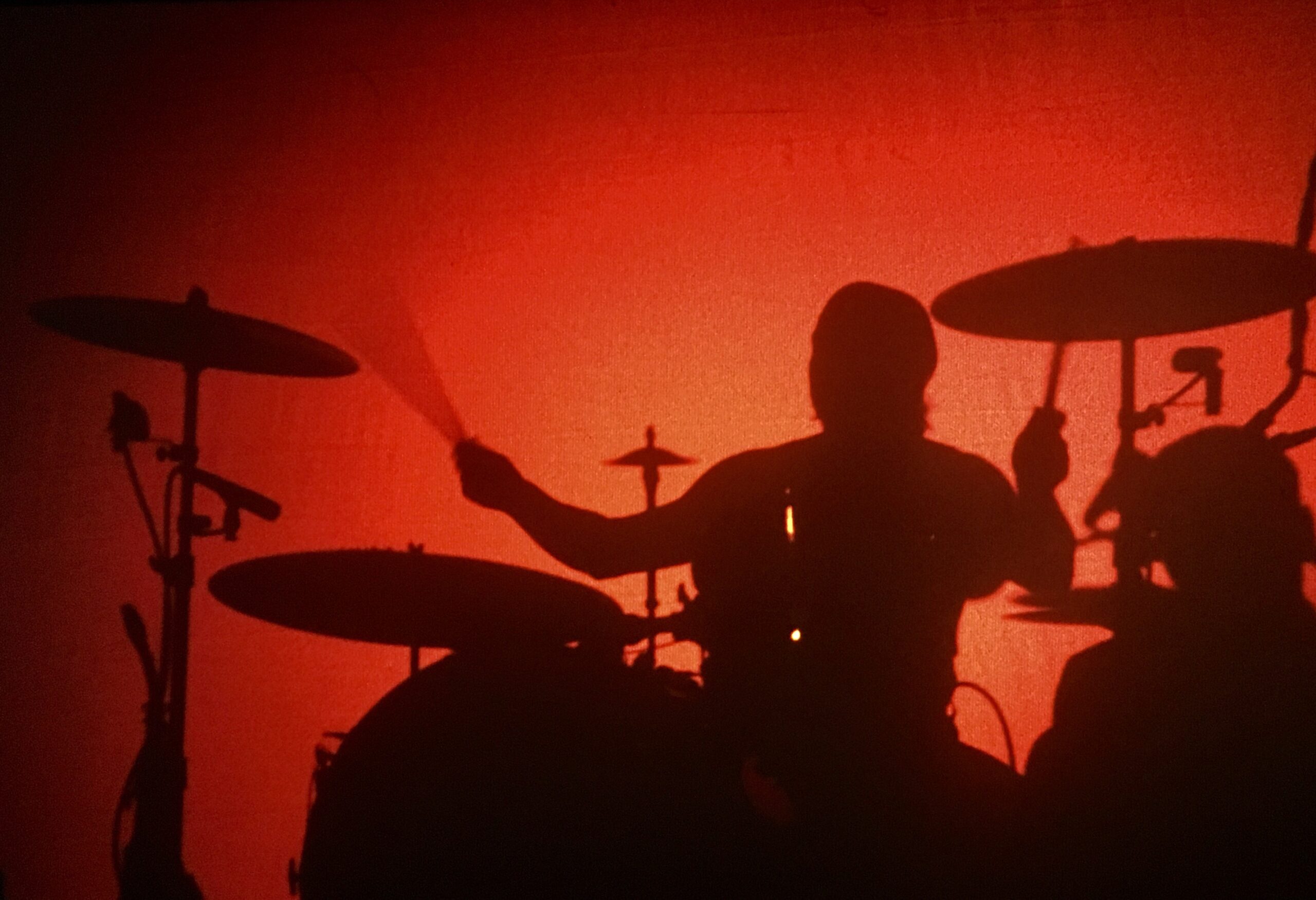
Hunt Sales mentre interpreta il brano “Sorry”, con i Tin Machine al Teatro Brancaccio di Roma, 10.10.1991 (Marcello Nitti © Geophonìe)
La sua storia, quindi, attraverso questa sua pubblicazione, ci ha incuriosito: una storia di vagabondaggio, di droghe, di percorsi itineranti e trasversali tra generi musicali diversi che sinora aveva probabilmente occultato la direzione artistica interiore che Sales serbava in sè stesso, e che oggi invece affiora.
–Sig.Sales, non è facile decidere da dove cominciare, ma in qualche modo dobbiamo pur “rompere il ghiaccio” , come si dice in Italia. Tu hai un’ottima reputazione come musicista e hai sempre dimostrato una forte coerenza musicale con chiunque tu abbia lavorato. Possiamo immaginare che tu abbia sempre suonato con musicisti vicini al tuo feeling, ma che ricordi hai dei tuoi inizi come musicista? Ti sentivi sicuro o avevi paura di non fare bene?
“I miei ricordi degli inizi sono legati alla persona che diede impulso sin dall’inizio della mia carriera al mio amore per la musica, Earl Palmer, un famoso batterista di New Orleans che aveva lavorato con Little Richard e Fats Domino. Ero a una sessione di registrazione a 6 anni e lo vidi suonare durante la sessione, lo incontrai quando lavorò su uno dei dischi di mio padre e ha cambiato la mia vita. Il fallimento non è mai stato un’opzione: non che io non abbia avuto fallimenti, ma – come si suol dire – solo chi non prova fallisce”.
-Quando alla fine degli anni ’70 suonavi con Bowie e Iggy Pop insieme a tuo fratello Tony, molti lodavano il tuo lavoro e l’intro che suoni nella canzone “Lust for life” rimane memorabile. Un “culto” che ancora affascina e produce energia e chiarisce come deve essere il “Rock”! Cosa puoi dirci di quel riff mozzafiato che suoni, che conservi per tutta la canzone e che ritroviamo nel film “Trainspotting”? Com’è nata l’idea della parte di batteria di quella canzone?
“ Si basa su diverse cose. Uno, Motown, “You Can’t Hurry Love”, “George of the Jungle” che è tratto da un cartone animato, e “Armed Forces Radio” a Berlino, in Germania, che è qualcosa che ho sentito molto mentre vivevo a Berlino con Iggy e David. Ho mescolato tutto insieme, e come molte cose nella musica non c’è niente di nuovo, o è come lo prendi in prestito o prendi un’idea per un’altra idea e la fai tua”.
Hunt Sales, Roma, Teatro Brancaccio, 10.10.1991 Marcello Nitti © Geophonìe
-Hai partecipato a due importanti svolte musicali di David Bowie e Iggy Pop, sempre in compagnia di tuo fratello Tony al basso nel periodo berlinese 1976-1977 e con Tin Machine a Montreux e in altri studi di registrazione. Anche oggi la tua interpretazione della canzone “Sorry” rimane una delle migliori canzoni del secondo album dei Tin Machine. Cosa ne pensi dell’esperienza con i Tin Machine oggi? È stato fatto tutto quello che volevi fare con Tin Machine?
“La cosa buona dei Tin Machine è che mi face suonare di nuovo la batteria. Prima dei Tin Machine avevo fatto molto arrangiamento e produzione per altri, ma non molto percussioni. Ovviamente lavorare con David, dopo così tanti anni dopo il 1976-77 con Iggy Pop, essere diventato un po’ più grande e ritrovare David, è stato fantastico”.
–Finalmente per chi ama la tua musica è uscito il tuo primo album solista intitolato Hunt Sales Memorial “Get Your Shit Together”. Tu dici in “One day” : sono solo. Cosa significa per te la solitudine? E’ un modo per fuggire dallo stress della vita, o trovi invece in essa qualcosa che ti dia più creatività?
“Non si tratta di essere soli. Non si tratta di solitudine. È qualcosa di più, come stare con molte persone, amici di famiglia o sconosciuti e sentirsi soli. Ha più a che fare con un viaggio nella propria testa, piuttosto che alla sensazione di non appartenere o adattarsi. E’ un sentimento condiviso da molte persone, come l’outsider, il tossicodipendente, l’alcolizzato. Il sentirsi soli è una sensazione universale. Le persone dicono di sentire un vuoto in loro che non viene mai colmato. Ha a che fare con tutto questo, e anche più”.
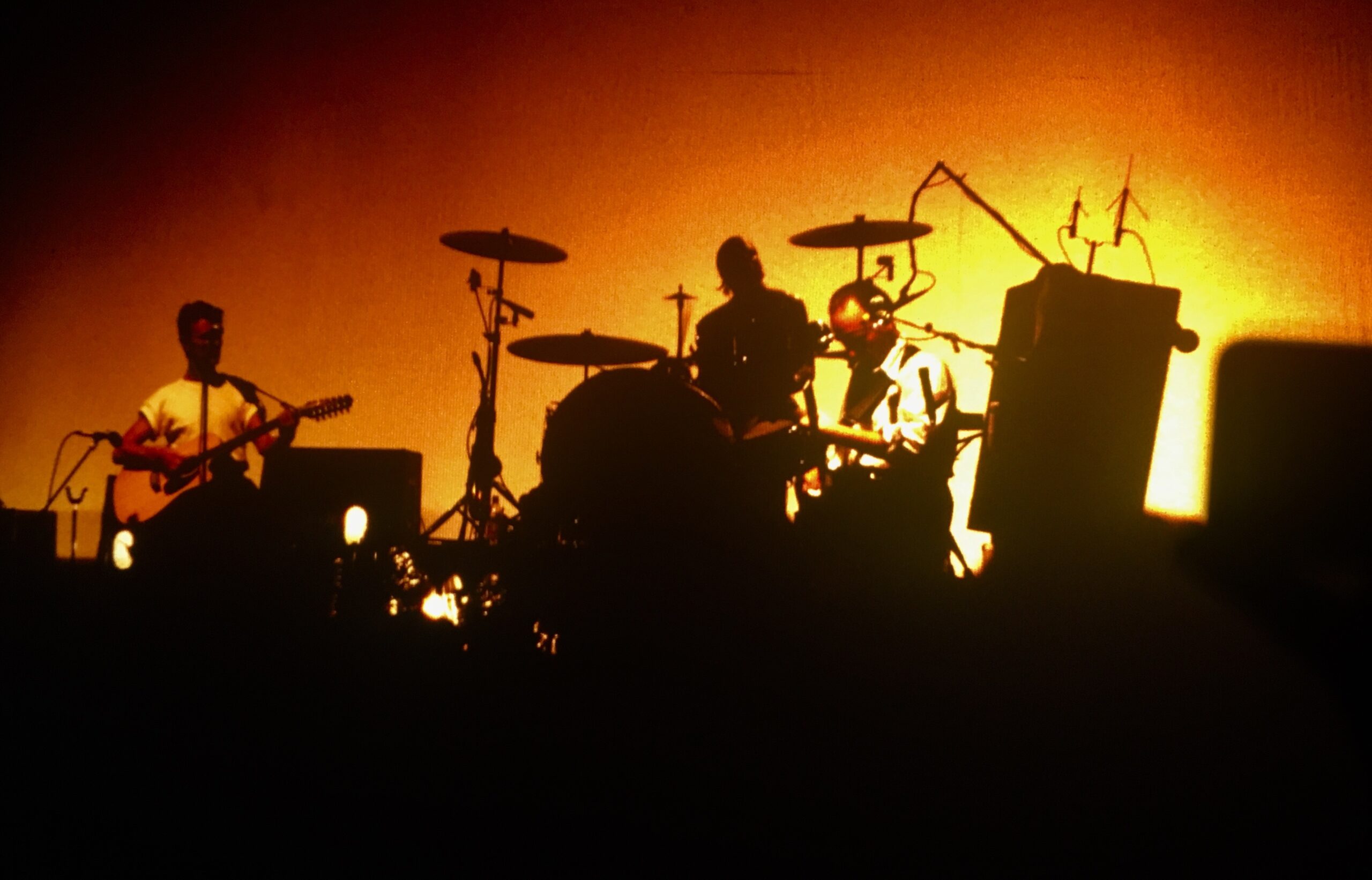
Tin Machine, Roma, Teatro Brancaccio, 10.10.1991 Marcello Nitti © Geophonìe
-Oltre all’energia pura, cosa deve esserci in una canzone che suoni? Un testo di una storia vera?
“ Spero che in un modo o nell’altro qualcosa con cui posso relazionarmi debba essere nella canzone che darà il via a un sentimento, o a sentimenti che mi ispireranno. Speriamo che l’ispirazione sia condivisa anche con l’ascoltatore”.
-Il tuo primo album da solista è così reale, secondo me, e mostra il tuo brillante talento come compositore. Anche il tuo modo di cantare è caldo e ruvido nel modo giusto e questo non è comune per un batterista. Cosa c’è di magico per te nel tuo album?
“Ho una band e questa band è composta da me e da un ragazzo di nome Tjarko Jeen che viene dall’Olanda. Ho messo insieme questa band, The Hunt Sales Memorial, 10 anni fa, la verità è che l’opportunità si è manifestata in un momento marginale della preparazione, il chè significa che ero preparato dopo aver provato centinaia di ore con questo gruppo e aver suonato nel corso degli anni. Quando si è presentata l’opportunità di fare il disco, ero preparato. Il disco è stato fatto alla vecchia maniera, in un lasso di tempo molto breve come i dischi degli anni Sessanta e Cinquanta”.
– Ti piacerebbe fare una serie di concerti in Europa?
“Sì, lo farei. Sto cercando il promoter giusto” .
– Ti senti completo come musicista o pensi che ci sia sempre qualcosa da imparare?
Sì, c’è sempre qualcosa da imparare”.
Cosa sono i sogni per te, signor Sales?
“Venire in Europa e buttare giù tutto”.
Marcello Nitti © Geophonìe
riproduzione riservata.
Dove acquistarlo:
ITALY
https://www.amazon.it/Your-Shit-Together-Sales-Memorial
U.S.A.
https://www.amazon.com/Your-Shit-Together-Sales-Memorial
Pinhdar: Flussi continui di intime sensazioni
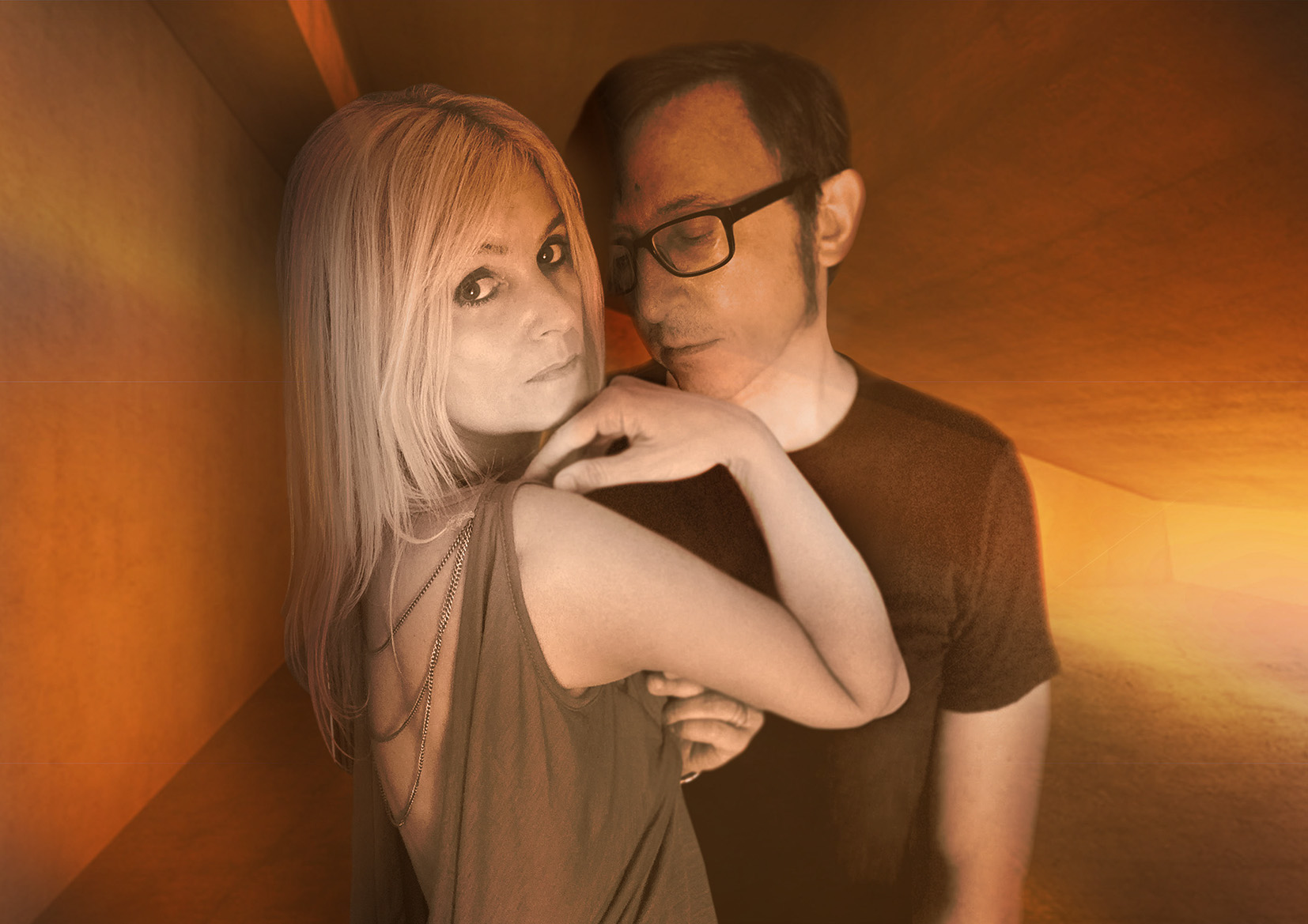 Si intitola ‘Parallel’ il loro nuovo disco.
In questi ultimi anni l’intreccio tra Musica e Letteratura ha finalmente trovato tributi ragguardevoli, specie se pensiamo al Nobel ricevuto da Bob Dylan, alla laurea ad honorem assegnata a Patti Smith e a tanti riconoscimenti che l’arte musicale colta ormai consegue: ed è forse da poco tempo, dunque, che un nuovo pubblico riesce ad accostarsi e apprezzare questa fusione, riconoscendo come talvolta parole ed atmosfere musicali riescano a fondersi, abbracciarsi, creando gomitoli di poesie.
Quale destino ci attende? Invece di ricercarlo, i Pinhdar il loro destino lo realizzano, costruendo trame intime ed avvolgenti.
Non è un caso che Max Tarenzi e Cecilia Miradoli siano ispirati dalla poesia del greco antico, simbolicamente rievocando Pindaro, e che testi e musiche del loro secondo album siano un condensato unico ed uniforme di sfavillante bellezza.

PHINDAR, “Parallel” (Fruits de Mer Records, Marzo 2021)
Parliamo di artisti italiani che coltivano suggestioni, emozioni, visioni, apparizioni e ne offrono una celebrazione asciutta e profonda. Meraviglie nascoste, ma che possono essere svelate soltanto da un ascolto attento e riflessivo.
La voce di Cecilia Miradoli si lascia trasportare da tappeti di nuvole che accarezzano i sensi più delicati e palpitanti e non solo …… insieme a Max Tarenzi le composizioni diventano piccole opere di respiri rigeneranti.
Ogni brano di questo loro secondo album, “Parallel” (Pubblicato nel Marzo 2021 in digitale, in CD e in un’edizione limitata in vinile pubblicata dall’etichetta inglese Fruits de Mer Records), lascia apparire tra le ombre brividi di luce interiore e momenti di maestosa delicatezza.
Elegia dei sentimenti e del vivere l’istante. L’istante è il tempo in cui viviamo e che nutre l’anima che tanto preziosa è per noi tutti.
La musica dei Pinhdar ci abbraccia soffice e cresce in penombra con fierezza.
16/10/2021
Marcello Nitti © Geophonìe
Diritti riservati
 “Parallel” prodotto da HOWIE B
26 marzo 2021 – 20 settembre 2021
su vinile in UK
“Parallel è uno degli album di cui vado più orgoglioso ”
Howie B
“Capolavoro del duo italiano con Howie B”
COLLEZIONISTA DI RECORD (Regno Unito)
COLLEZIONISTA DI RECORD (Regno Unito)
“Dark e atmosferico, tra dream pop e trip hop”
LA REPUBBLICA (IT)
LA REPUBBLICA (IT)
“Un’istantanea della vita vissuta nel 2020 ”
Prog (Regno Unito)
“Fantastico e seducente”
Suono elettronico (Regno Unito)
VIDEO
SOCIAL